
Mărțișor: a custom celebrating spring, new beginnings and friendship
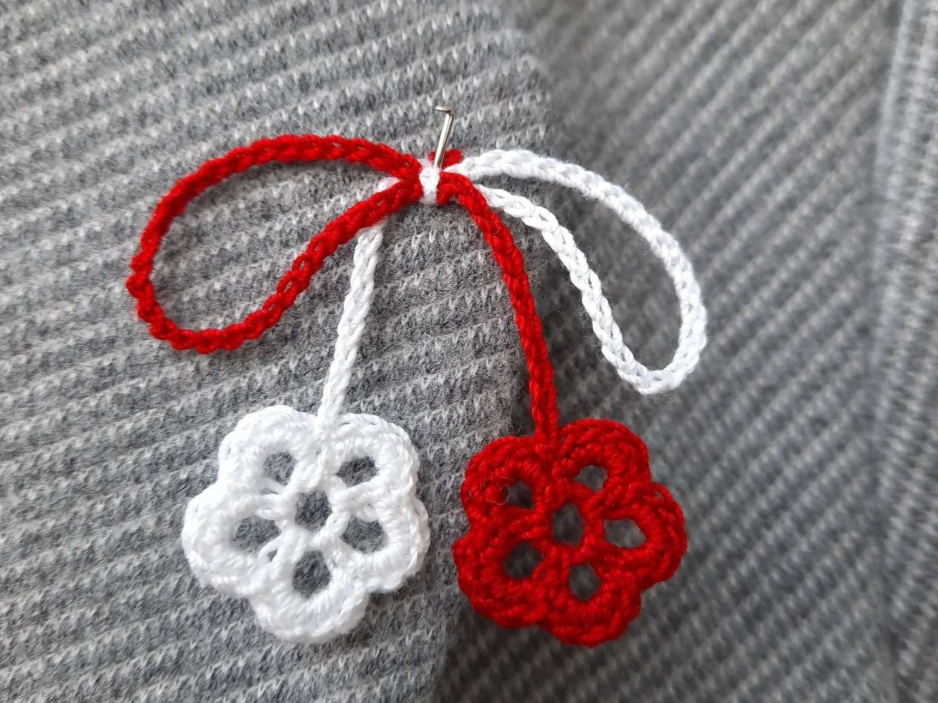
Spring has always been my favorite time of year. The longer days, the warm sun, the trees just beginning to blossom always bring a smile to my face. But more than anything, spring brings back one of my most cherished childhood memories: Mărțișor. I grew up with this tradition and, for years, mistakenly believed it was a global phenomenon. Every March in Romania, we exchanged small amulets tied with red and white threads with our friends. We pinned them proudly to our chests, almost like badges of honor, a sweet, unspoken popularity contest. We collected these tiny symbols of friendship and well-wishing, delighting in how many we received and how they made us feel: seen, appreciated, connected.
When I moved to the United States, keeping the tradition alive wasn’t easy. Mărțișoare are hard to find here, and most people don’t know what they symbolize. For a few years, I quietly let it go but every March, I felt a small pang of sadness, like I was missing a piece of home. Eventually, I decided the tradition mattered too much to lose. Now I source my Mărțișoare a year in advance and share them with friends, whether they’re familiar with the custom or not. There’s something deeply meaningful about passing on a ritual that shaped me. Celebrating it with my friends brings us closer in ways that are hard to explain but easy to feel.
Friendships become even more essential as we move through adulthood, and especially once we become parents. Life fills up quickly. Between responsibilities and routines, it’s easy to drift further from the people who once anchored us. Maintaining friendships takes intention: sending texts, planning and making time for each other. But the return is immeasurable. We need people who see us beyond our roles: not just as employees, daughters or sons, or parents, but as whole individuals with strengths, quirks, dreams, and flaws. Friendships remind us who we are. They steady us, celebrate us, and make life richer and more meaningful.
If you’ve been thinking about someone you haven’t spoken to in a while, take it as your sign. A simple “Hey, I was just thinking about you” can reopen a door you thought was closed by too much silence. Sometimes, that’s all it takes to bring a little spring back into a friendship.
Bonus: The History of Mărțișor in Romania
Mărțișor is one of Romania’s oldest and most beloved traditions, celebrated each year on March 1st to mark the arrival of spring. Deeply rooted in folklore and ancient customs, Mărțișor symbolizes renewal, hope, and the triumph of life over winter’s darkness.
The name “Mărțișor” comes from “Martie,” the Romanian word for March, which in turn derives from Mars, the Roman god of war and agriculture. In ancient Roman times, the new year originally began in March, making it a month associated with rebirth and new beginnings. Historians believe that the Mărțișor tradition may date back over 8,000 years, with archaeological discoveries revealing small river stones painted red and white that were worn as amulets. These early tokens were believed to bring protection, health, and good fortune.
The red and white thread that defines Mărțișor carries powerful symbolism. Red often represents life, vitality, love, and the feminine principle, while white symbolizes purity, clarity, wisdom, and the masculine principle. Twisted together, the two colors reflect unity and balance: winter and spring, death and rebirth, darkness and light. In Romanian folklore, this intertwining expresses harmony between opposing forces and the cyclical nature of life.
One popular legend connected to Mărțișor tells of Spring battling Winter to free the sun. As Spring fought bravely, she injured her finger, and drops of her blood fell onto the snow. Where the snow melted, snowdrops (the first flowers of spring) appeared. The red of her blood and the white of the snow became the symbolic colors of the Mărțișor string. This story reinforces the idea that warmth, hope, and renewal are born through struggle.
Traditionally, on March 1st, men offer Mărțișor tokens to women as gestures of respect, appreciation, and affection. In some regions of Romania, customs vary: in Moldova, women may give Mărțișor to men, while in Transylvania, children wear them for protection against illness and misfortune. The charm is typically worn pinned to clothing near the heart or on the wrist for several days or throughout the month of March. At the end of the period, it is often tied to a blossoming tree branch as a wish for prosperity and good luck.
Over time, Mărțișor has evolved from simple braided threads to intricate handmade or commercially produced charms, including symbols like four-leaf clovers, ladybugs, hearts, and flowers. Despite modernization, the essence of the tradition remains intact: it is a celebration of life’s renewal and human connection.
In 2017, the cultural practice of Mărțișor was recognized by UNESCO as part of the Intangible Cultural Heritage of Humanity, shared by Romania and neighboring countries such as Moldova, Bulgaria, and North Macedonia. This recognition highlights the tradition’s enduring cultural value and its role in fostering community and continuity.
Today, Mărțișor remains a cherished ritual in Romania, a small symbol carrying centuries of history, myth, and meaning, and a reminder each spring that light always returns.
